Outdoor Activity Materials: activity pages, clipboards, pencils, and copies of field identification guides
Step 1: Engage through Discussion
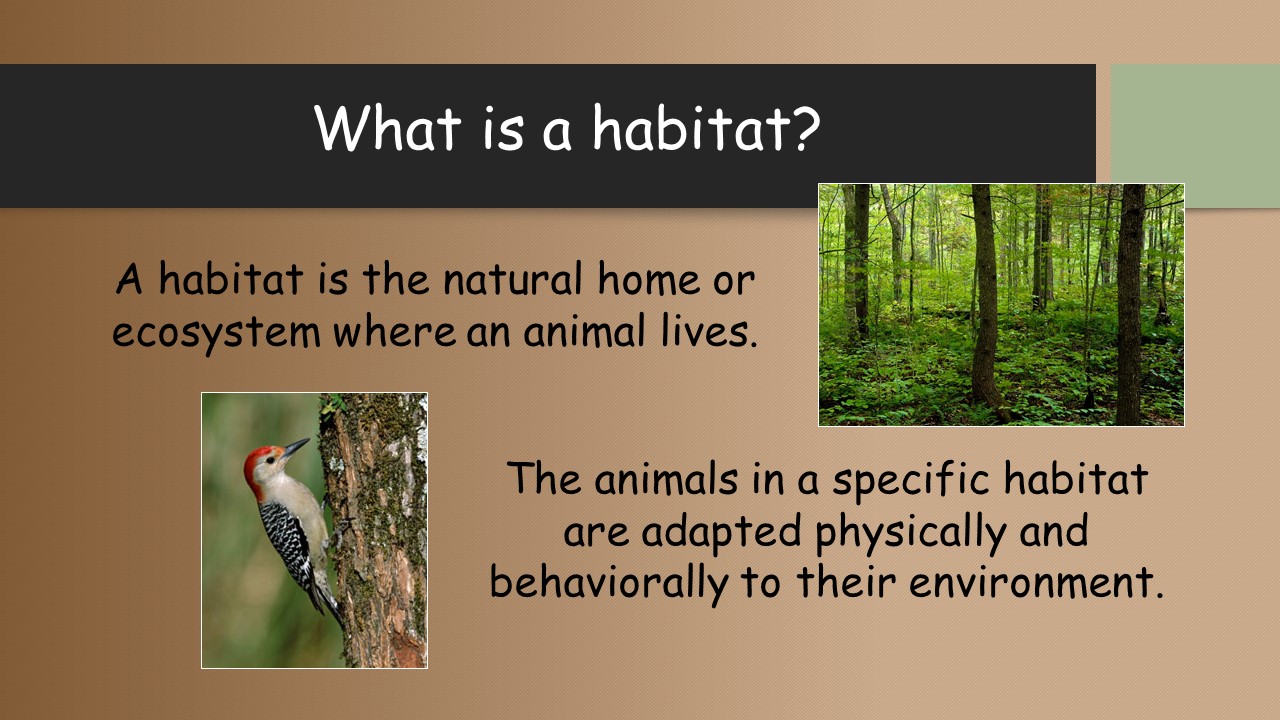
Engage the students and capture their interests with an Interactive Q&A (or as PDF) that allows you to click through the questions one at a time. You can gauge your students’ understanding of the topic as they answer the questions. Print and use the Q&A Info Sheet (or as Word Doc) to anticipate the next question in the Interactive Q&A and to guide the conversation with the students. (Note: For the PowerPoint (PPT), click “Slide Show” & “From Beginning” to display the questions and answers separately.)
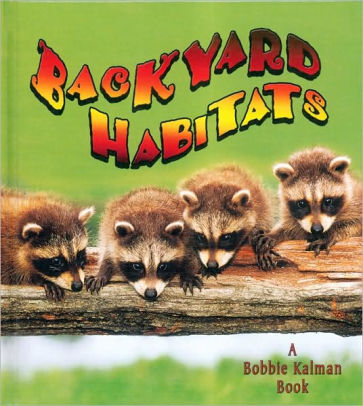
As you read this book, you can further explore the topic and discuss your students’ experiences and knowledge around the topic: Backyard Habitats by Bobbie Kalman (ISBN: 978-0778729853)
Step 4: Elaborate with a Field Investigation in the Habitat Lab
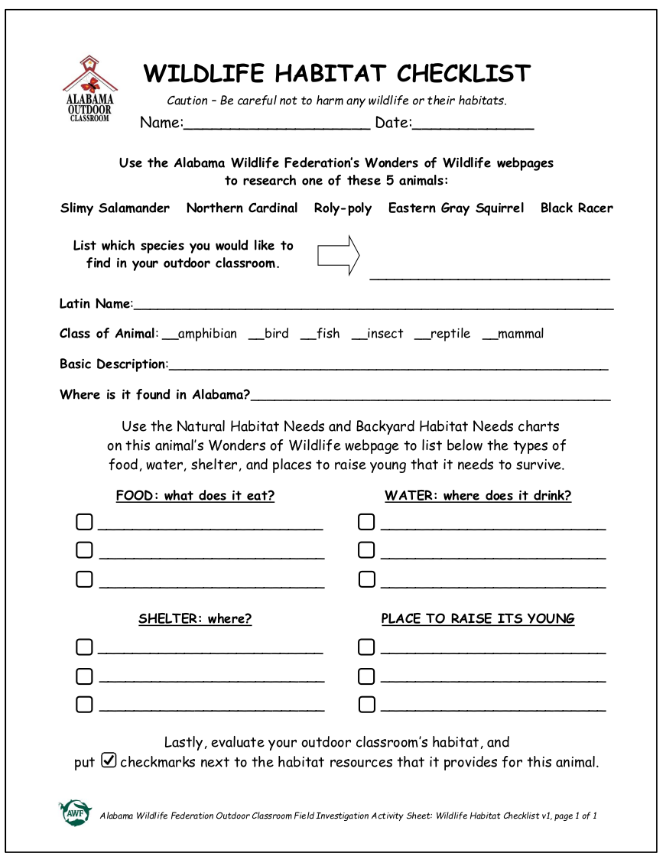
Students apply what they have learned as they investigate the topic in your Habitat Lab and record their real-world observations on their activity page:
Split students into five groups and assign each group a specific class of animal that they can research: (1) mammal, (2) bird, (3) reptile, (4) amphibian, or (5) invertebrate. Each student can choose an animal in the class of animal s/he was assigned on the Wonders of Wildlife webpage. This will help your students learn about the habitat needs of a wide variety of native Alabama wildlife and their habitat needs.
Version #1 – Wildlife Habitat Checklist: General AnimalActivity Page: PDF (as is) / Word Doc (editable)
The students should list which animal they have chosen and answer the questions about the animal and its habitat needs on the activity page.
Outdoor Discovery:
Next, have the students explore your Habitat Lab to evaluate its habitat and determine whether or not it is suitable for the animal. If the Habitat Lab contains a habitat requirement, they should place a checkmark next to that habitat requirement. If they do not find a specific habitat requirement for their animal, they should not place a checkmark next to that requirement.
Indoor Discussion:
Afterward, they return to the classroom to discuss whether or not the Habitat Lab is suitable for the animal.
Discuss the relationship between habitat requirements and an organism’s survival.
Discuss how an organism relies on its habitat and how it has an impact on its habitat.
The students should answer the questions about it and its habitat needs on the activity page.
Outdoor Discovery:
Next, have the students explore your Habitat Lab to evaluate the habitat and determine whether or not it is suitable for the Fowler’s Toad. If the Habitat Lab contains a habitat requirement, they should place a checkmark next to that habitat requirement. If they do not find a specific habitat requirement for the Fowler’s Toad, they should not place a checkmark next to that requirement.
Indoor Discussion:
Afterward, they return to the classroom to discuss whether or not the outdoor classroom is suitable for the Fowler’s Toad.
Discuss the relationship between habitat requirements and an organism’s survival.
Discuss how an organism relies on its habitat and how it has an impact on its habitat.
Evaluate the students’ understanding of the topic with the following assessment tools:
Class Presentations: Ask the students to take turns giving a 3-minute talk or presentation about the animal they chose, a description of this animal and why they want to see it in the Habitat Lab, what its habitat needs are, and whether or not your schoolyard habitat could provide the habitat resources that it needs to survive.
Independent Habitat Assessment: Assign a specific animal from AWF’s Wonders of Wildlife webpage and have the students fill out Activity Page #1 as an assessment for that animal.