


 |
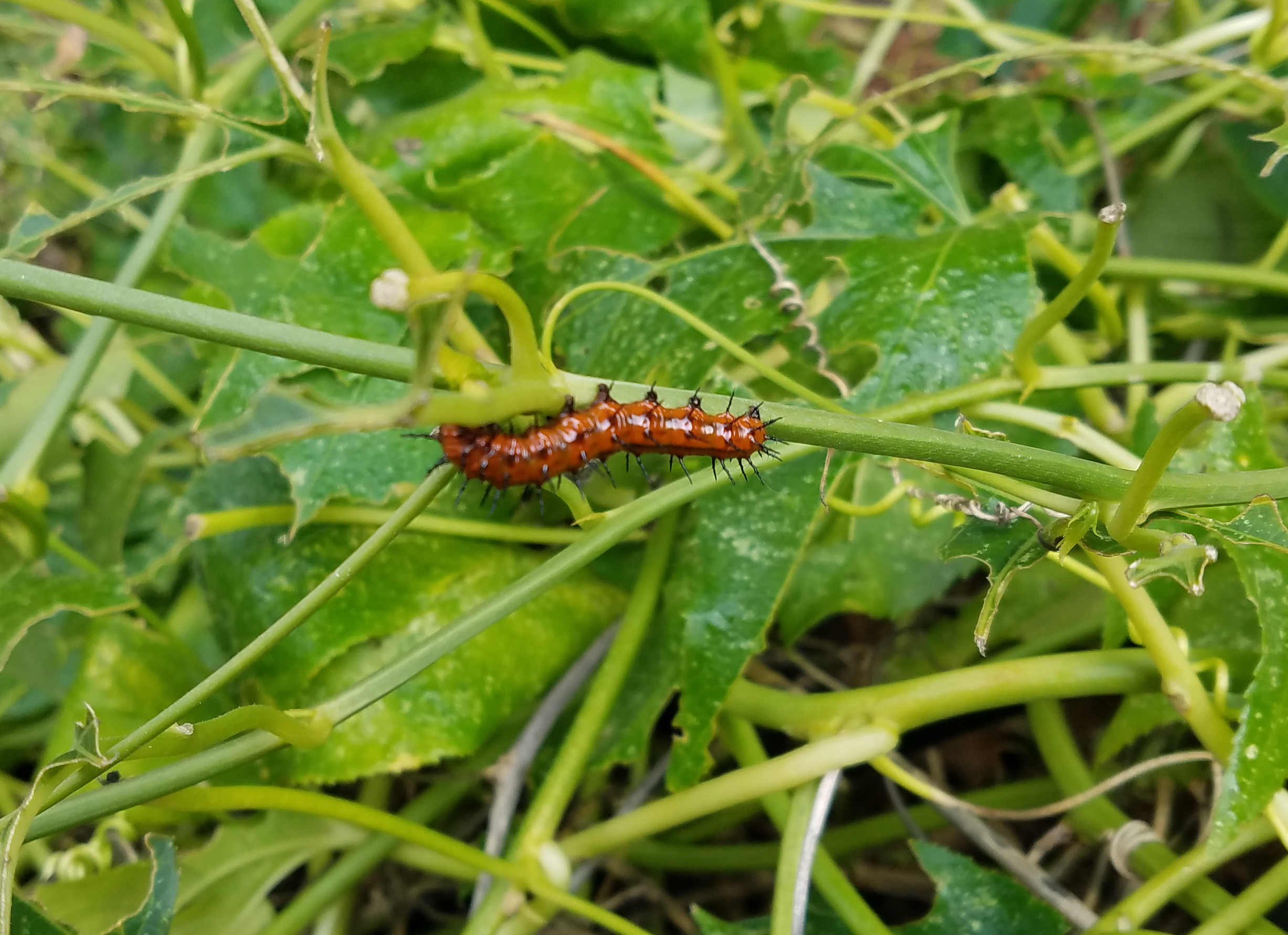
| Gulf Fritillary Caterpillar on Passionflower Vine |
 Investigate Butterflies and Their Habitat
What is a butterfly garden?
A Butterfly Garden attracts butterflies to your outdoor classroom by providing habitat including food, water and shelter for all four life cycle stages of butterflies:
1) egg
2) larva or caterpillar
3) chrysalis
4) butterfly
Click on the icons below to learn more about butterflies and their habitat!
 |
 |
 |
 |
 |
| Alabama's Butterflies | Life Cycle | Habitat Needs | Interesting Facts | Other Species |
| Alabama's Butterflies |
Alabama is home to 84 species of butterflies! Butterflies, moths, and skippers all belong the order Lepidoptera (meaning “scaly wings”). They all have coiled sucking mouthparts, scales on their wings, and complete metamorphosis.
These three groups differ in many ways:
| Butterflies | Moths | Skippers | |
| Activity: | Diurnal (active during the day) | Nocturnal (active during the night) | Diurnal (active during the day) |
| Antennae: | Long, thin with clubbed tips | Long, pointed or fern-like | Long, thin with clubs tapering to pointed hooks on the tip |
| Wings: | Not jointed | Front and back wings are held together by structure called “frenulum” | Not jointed |
| Resting Posture: | Wings together above body | Wings flat | Wings together above body |
| Forelegs: | Reduced, missing end segments | Fully developed | Reduced, missing end segments |
| Pupae: | Chrysalis | Cocoon | Chrysalis |
Visit the Alabama Butterfly Atlas website for detailed information about the butterflies and moths that call Alabama home or travel through Alabama during their migration.
| Life Cycle |
Baby butterflies do not look like adult butterflies. They go through a process called metamorphosis, during which they undergo physical changes.
Step 1 – Eggs:
 |
| Butterfly Life Cycle (Monarch) |
Eggs are usually laid on leaves or stems of “host” plants (that later become food) by adult females.
Step 2 – Caterpillars:
Caterpillars (or larva) hatch from the eggs. It has chewing mouthparts and eats the plant on which its egg was laid. It grows a lot and quickly! As it grows, it sheds (or molts) several times – its skin becomes too tight and splits open, revealing a new, larger skin underneath.
Step 3 – Chrysalis:
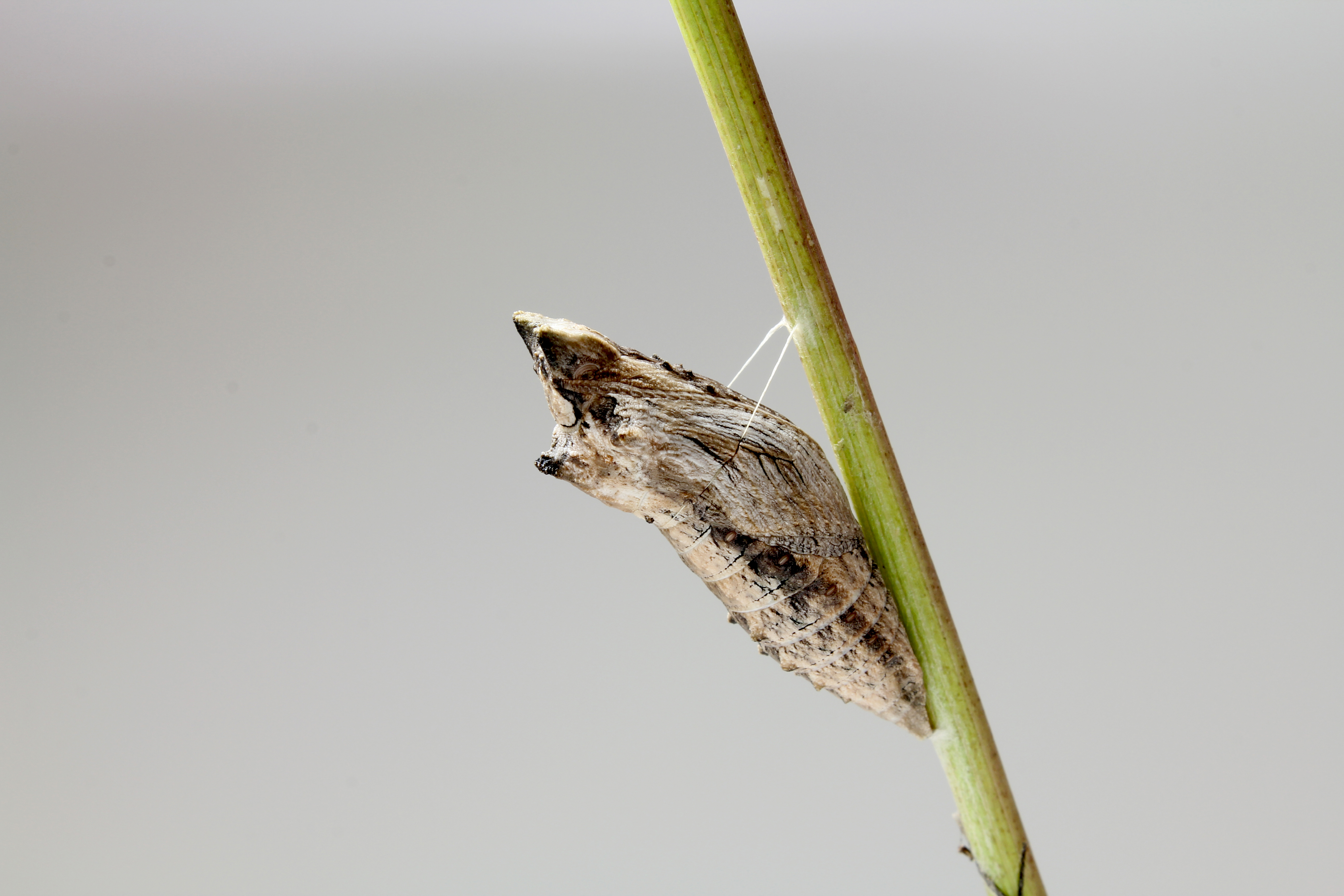 |
| Black Swallowtail Chrysalis |
Step 4 – Adult Butterfly:
 |
| Monarch Butterfly Newly Emerged Flickr – Patty O'Hearn Kickham |
When the metamorphosis process is complete, the butterfly emerges from the chrysalis with tiny, wet, and crumpled wings. The butterfly clings to its empty chrysalis shell as hemolymph, the blood-like substance of insects, is pumped through its body. As the hemolymph fills the butterfly's body and wings, they enlarge. About one hour after emerging from its chrysalis, the butterfly's wings are full-sized, dry, and ready for flying. It will make short flights until it is strong enough to fly longer distances.
Adult butterflies rely on flight to search for flowers with nectar. Butterflies use a long, coiled tube-like mouthpart (proboscis) to drink nectar from flowers. A few days after emerging from the chrysalis, the butterflies are able to mate and begin the life cycle again.
Your butterfly garden includes flowering plants that provide nectar and pollen throughout the growing season as well as water, shelter, and a place to raise young (host plants).
Food:
 |
| Black Swallowtail Caterpillar Feeding on Host Plant |
Nectar plants: Nectar produced b the flowers of wildflowers, bushes, and/or other trees in your garden is the primary food source for butterflies
Host plants: Caterpillars eat the leaves of the plants on which their eggs were laid. Each species of butterfly has specific host plants on which they lay eggs and on which the caterpillars of that species feed.
Your butterfly garden should include both nectar plants and host plants to support the adults and caterpillars.

Click on the flowers to see the plant species commonly found in outdoor classroom pollinator gardens!
Water:
 |
| Butterflies Drinking from Puddle Pikist.com |
Butterflies get their water needs met by drinking nectar and visiting shallow puddles. Some species will also acquire their mineral needs by drinking around decomposing plants or animals or around animal dung.
If you have a puddling station in your garden (a saucer filled with sand, manure, and water), this provides minerals to visiting butterflies.
Shelter:
Butterflies will take refuge from inclement weather or predators in the bushes or trees in your garden.
Places to raise young:
Different species of butterflies only lay their eggs on specific species of plants (referred to as “host plants”) and the caterpillars will only eat these plants before pupating.
The most important part of your butterfly garden is native plants (plants that occur naturally in our area). They are better adapted for our specific climate and soil than non-native plant species (do not occur naturally and historically in a specific area; have been introduced). Native butterflies have co-evolved (influence each other in the process of development or evolution) with these native plants to most efficiently collect pollen and nectar, making their success more likely than if they were to visit non-native species.
These plants are an important base in the food chain, as they attract native butterfly species which are in turn food for native birds, mammals, reptiles, and amphibians. For these reasons, native plants increase the biodiversity (the variety of life found in a specific place) of your outdoor classroom.
| Interesting Facts about Butterflies and their Habitats |
Fact # 2:
Butterflies have chemoreceptors (cells that respond to chemical stimuli) on the backs of their legs and feet. They use these to determine whether or not the plant they have landed on is a suitable host plant where she can lay her eggs. When she lands on the leaf, she moves her feet until the leaf releases juices. She is able to use the chemoreceptors to test the plant’s juice and know if it’s the right type of plant before laying her eggs!
Fact # 3:
Some butterflies can fly upwards of 37 miles per hour! Most only fly around 5-12 miles per hour.
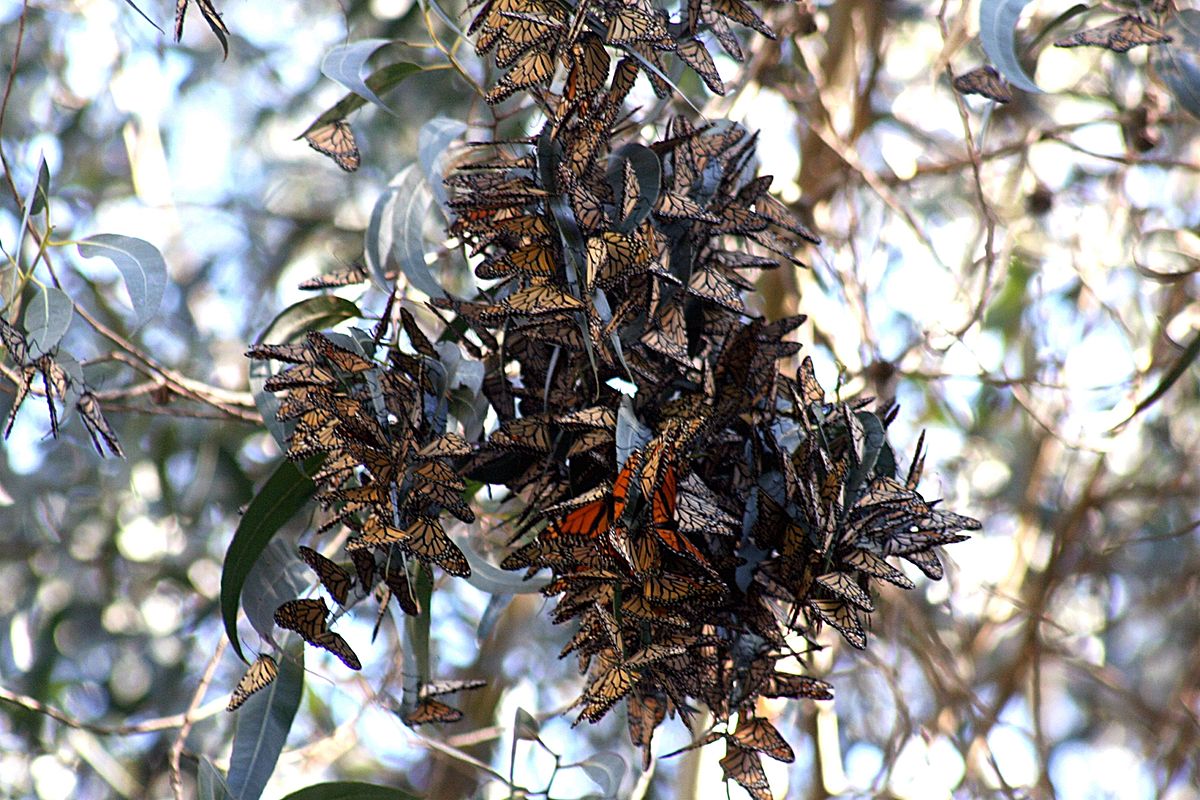 |
| Cluster of Monarchs Overwintering Wikimedia – Brocken Inaglory |
Fact # 4:
The Monarch is the state insect of Alabama. They are here in spring and fall as they migrate to and from their wintering grounds in Mexico.
Fact # 5:
Butterflies do not make cocoons! Instead, they molt into what is called a chrysalis, with a hard exoskeleton that protects the pupa. Cocoons are actually specific to moths! Moths spin a silk cocoon around themselves before their final molt.
Fact # 6:
Many native species of moths’ patterns allow them to blend in perfectly with tree bark, making it harder for predators to detect them.
Fact # 7:
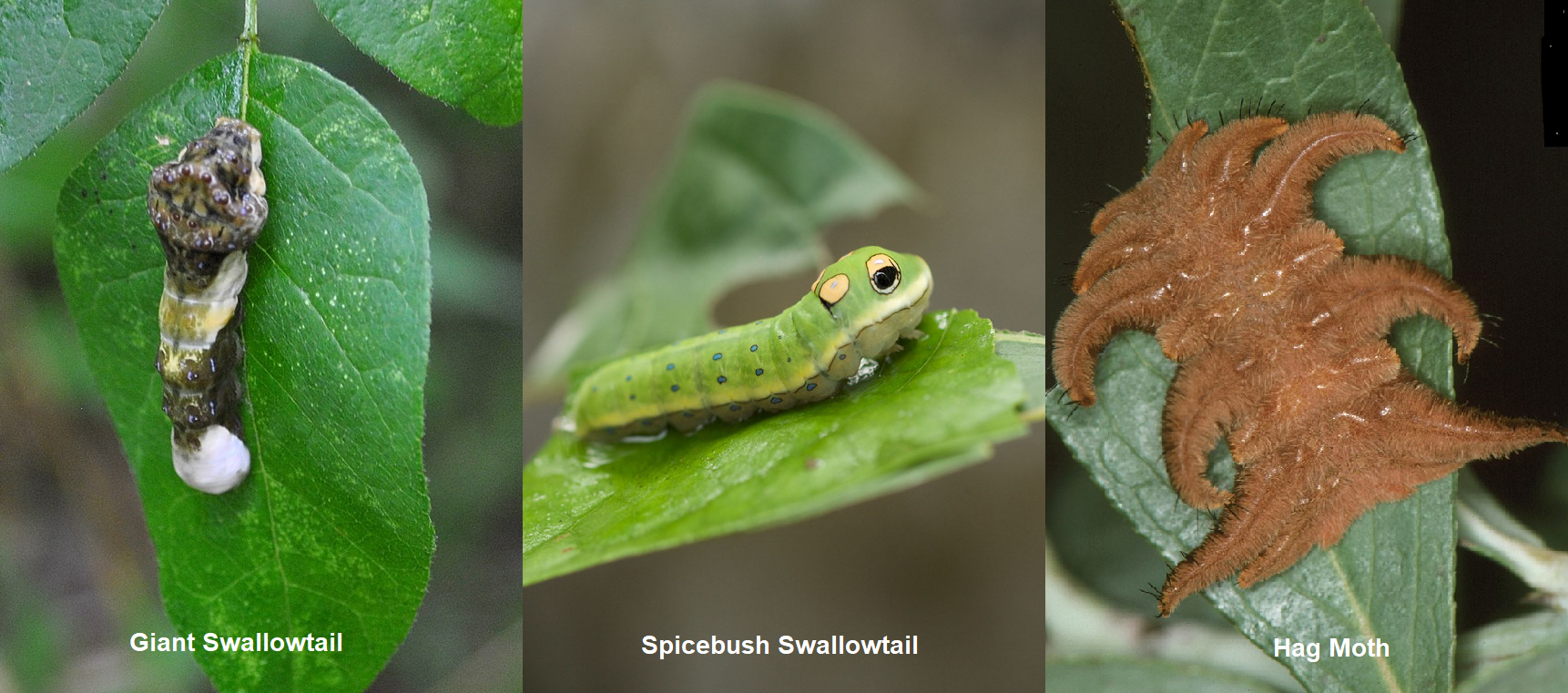 |
Some caterpillars are remarkably camouflaged or uniquely patterned in a manner to deter predators from eating them! Our native Giant Swallowtail caterpillar looks just like bird poop! Another native, the Spicebush Swallowtail’s caterpillar looks like a small snake or tree frog with very large eyes. The native Hag Moth caterpillar looks like a hairy spider with its flattened body and six pairs of curly, tentacle-like legs.
To see a list of plants most commonly found in an outdoor classroom butterfly garden, CLICK HERE!
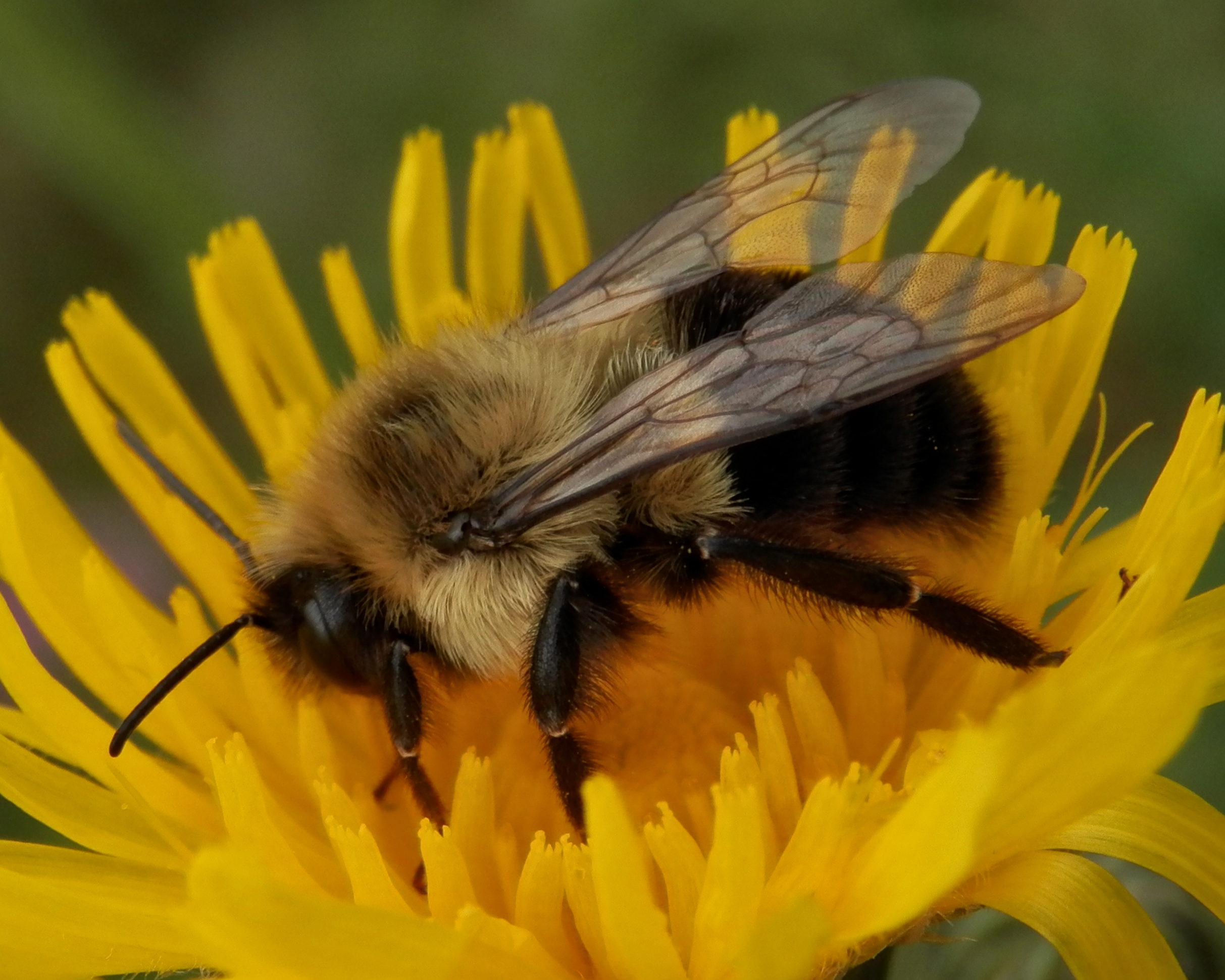 |
| Eastern Bumble Bee Wikimedia – Ryan Hodnett |
There is a variety of animals you may find in and around your butterfly garden. Of course this includes butterflies, like the Monarch or Black Swallowtail. You may also find bees, like the Eastern bumble bee, pollinating the flowers planted in the habitat. You may also find other insects in the moist soil or mulch like little black ants, pillbugs, and red wigglers.
SOURCES
 |
 |
|
 |
 |
|

Ogard, P. H., & Bright, S. (2010). Butterflies of Alabama: Glimpses into their lives. Tuscaloosa, Alabama: University of Alabama Press.
|


