HABITAT LEARNING LAB:

Dig into Plants: Longleaf Pine v2

Longleaf Pine

Other Common Names: Southern pine, Georgia pine, Longleaf yellow pine, Longstraw pine, Southern yellow pine

Scientific Name: Pinus palustris

Native to Alabama: Yes

Blue False Indigo

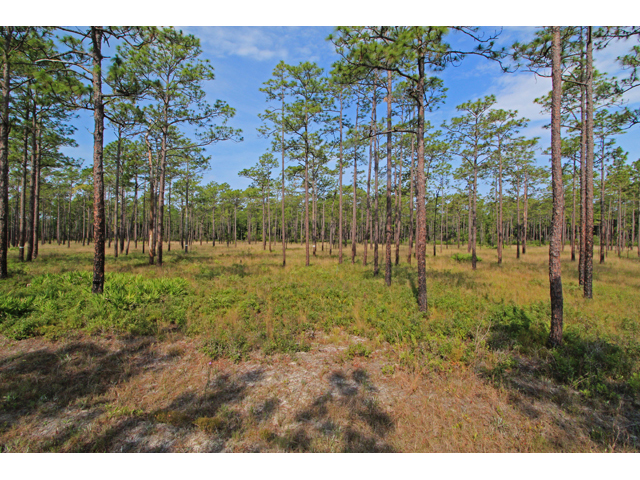
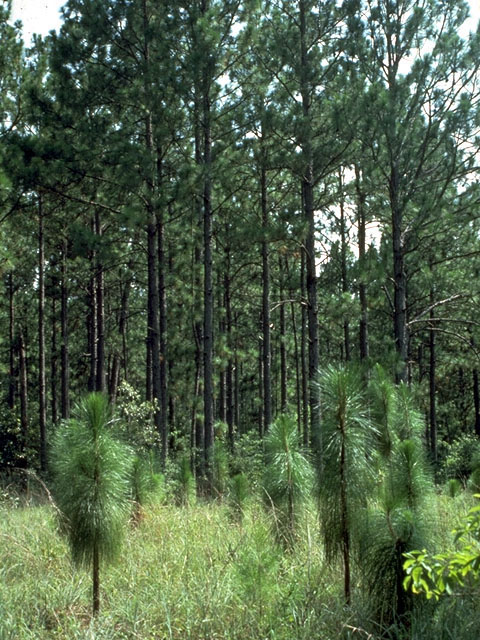
Longleaf Pine Stand
Lady Bird Johnson Wildflower Center – Benny Simpson

Click on image to enlarge it

Learn more about…

Basic Information
Classification Button
Maintenance
Adaptations Button
Plant ID
Life Cycle

Basic Plant Information
Blue False Indigo

  • I am a vascular plant with a woody trunk supporting woody branches, so I am a tree.
  • I keep leaves year-round, so I am evergreen.
  • I renew my growth each spring for many seasons, so I am perennial.
  • I can grow 60 – 120 feet high and 30 – 40 feet wide.
Mature Longleaf Pines
Flickr – Scott Zona

Click on image to enlarge it

Ecological Benefits
This plant provides food for:
Small Mammals Other Birds
Other Ecological Benefits:
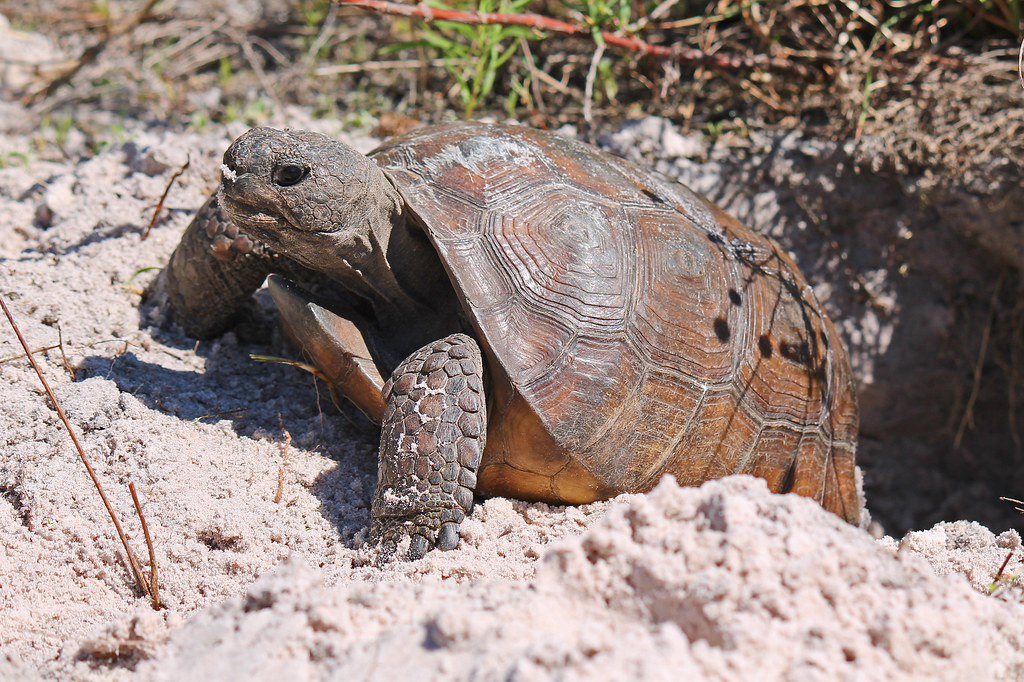
There are several endangered and threatened species that rely on longleaf pine habitats including the red-cockaded woodpecker, indigo snake, and gopher tortoise.

Gopher Tortoise
Flickr – Florida Fish and Wildlife (Carollyn Parrish)

Click on image to enlarge it

The gopher tortoise lives in the longleaf pine community and digs long underground burrows in the soil. Other species use these burrows to escpae frequent fires and other natural threats. Because so many species rely on the gopher tortoise, it is considered a keystone species (a species in which few individuals can have a large impact on the ecosystem).

Other Plants Found in Alabama with Similar Ecological Benefits:
Shortleaf pine
(Pinus echinata)
Loblolly pine
(Pinus taeda)
Virginia pine
(Pinus virginiana)
Slash pine
(Pinus elliottii)
Sand pine
(Pinus clausa)
Pond pine
(Pinus serotina)


Maintenance Notes
  • Prevent soil from becoming completely dry.
  • Tree will naturally prune lower branches, but any dead growth can be removed.
  • Can use lawn fertilizer three times per year for faster growth.

Habitat Requirements
This plant prefers:
Full Sun
(6+ hours of sun per day)

Average Watering
Well-drained, Sandy, Loamy, Clay,
or Acidic Soil

Leaf, Flower & Seed Identification
LEAF DESCRIPTION
Longleaf Pine Leaves
Wikimedia – Rasbak

Click on image to enlarge it
Leaf Characteristics Chart (PDF)
Shape:
Needle
Margin:
Entire/Smooth
Arrangement:
Complex
Form:
Simple
Description:
Long needle-like dark green leaves range from 8-18 inches in length; They form in fascicles (bunches) of three
FLOWER (CONE) DESCRIPTION

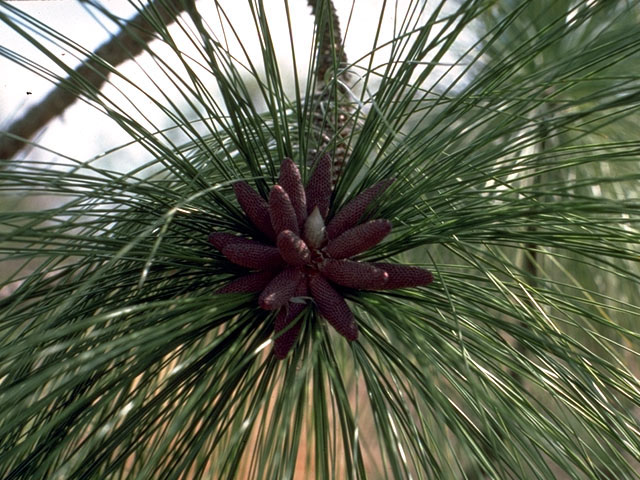
Male cones
Lady Bird Johnson Wildflower CenterPatsy Chaney

Click on image to enlarge it

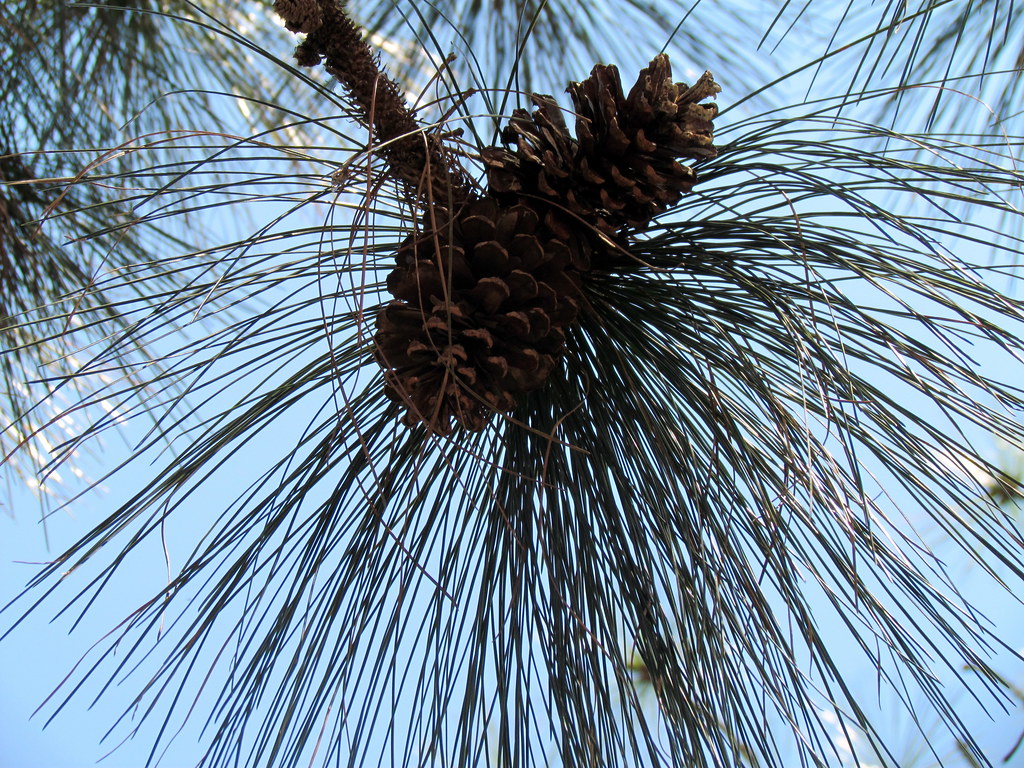
Female cone
Flickrbobistraveling

Click on image to enlarge it

Flower Shapes Chart (JPG)
Color:
Male structures are yellowish-red or blue/purple
Female structures are brown
Shape:
cylindrical cluster
(catkin)
Bloom Months:
March – April
Description:
Male and female conelike reproductive structures can be found on each tree. Male reproductive structures are yellowish red or purple blue (spongy in appearance and occur in clusters) and produce pollen
Female reproductive structures are woody in appearance and grow near branch tips
SEED DESCRIPTION

Longleaf Pine Seeds
LSU School of Renewable Natural Resources Andrew G. Haase, Jr.

Click on image to enlarge it

Type:
Cone
Description:
Cones are over 5-12 inches in length and over 3 inches in width. Cones dry out, turn brown, and drop seeds.
Months in Seed:
Fall
Plant spreads by:
In the fall, cones dry out and release seeds that are dispersed by the wind. The seeds must come in contact with the soil in order to germinate. Historically, natural fires would keep the ground clear from leaf litter, allowing the seeds to easily germinate. Fire prevention tends to allow leaf litter to accumulate on the ground, so when the longleaf seeds are dropped, they do not come in contact with the soil and will not germinate.
BARK DESCRIPTION
Longleaf Pine Bark
Lady Bird Johnson Wildflower Center – Albert F.W. Vick

Click on image to enlarge it
Color:
Orangish brown, reddish brown
Texture:
Flaky plates; peeling/shredding
Description:
As the tree matures, the bark thickens and forms a flaky plate-like structure; the thick bark insulates the inside of the trunk, protecting it from fire

Plant Life Cycle
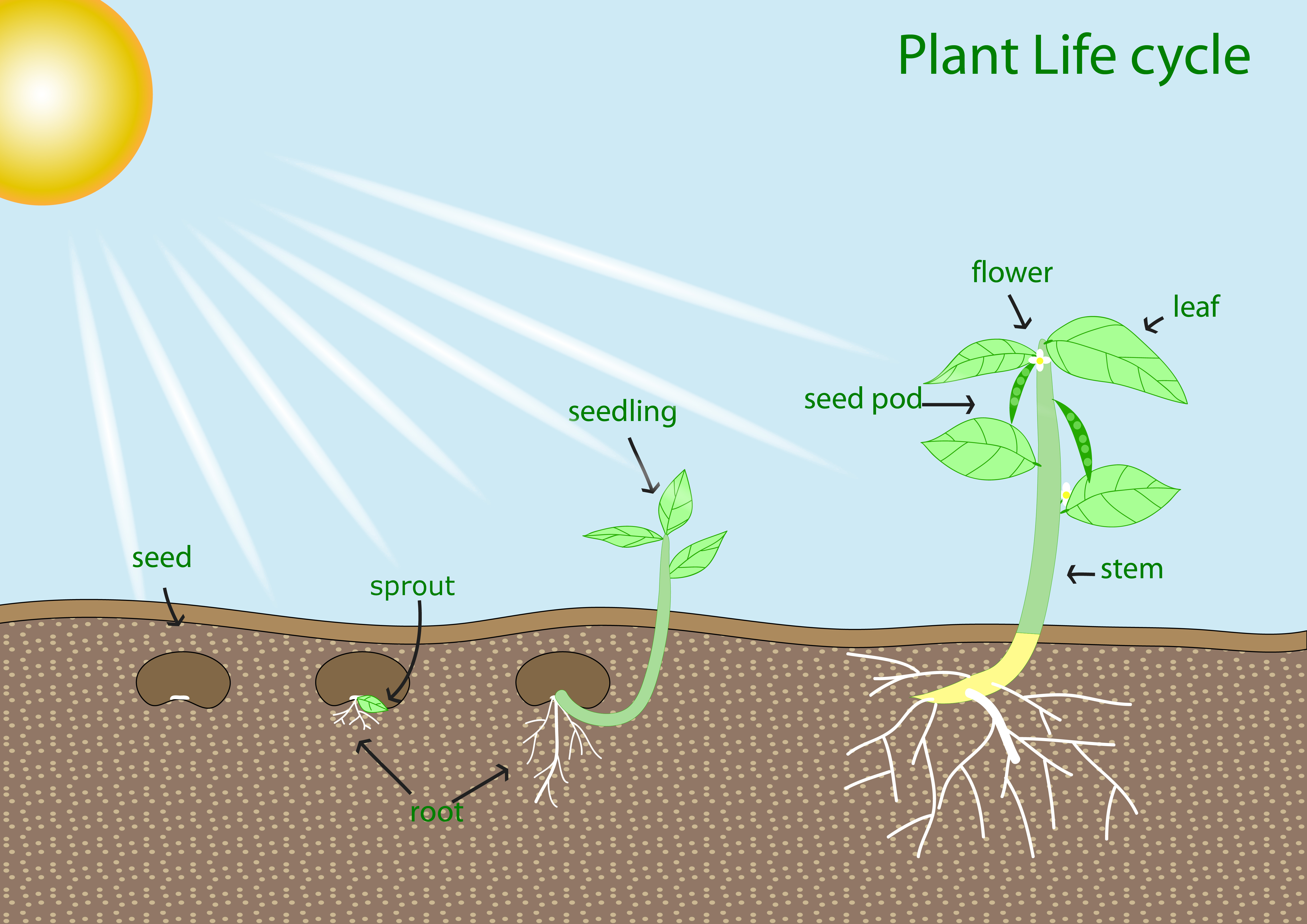
Plant Life Cycle:
  • All plants start life as a seed.
  • The seed turns into a sprout when it grows roots.
  • The sprout becomes a seedling as grows a stem and leaves above the ground.
  • After the seedling becomes an adult plant it will grow flowers.
  • After the flowers finish blooming, each flower turns into a seed.
  • When the seeds fall down to the ground, the plant life cycle starts again.
  • Each seed can become a plant if it has the food, water and space that it needs to grow.
General Plant Life Cycle
Dreamstime
Click on image to enlarge it
Longleaf pine life cycle adaptations for fire:
  • The longleaf pine tree depends on fire for reproduction. They have special adaptations throughout their life cycle that allow them to thrive when fire is present.
  • After the seed germinates, the longleaf pine tree goes through several distinct life cycle stages.
  • The seedling stage of the longleaf pine life cycle takes about a year. During this stage, the first needles will begin to push through the seed wall.

Seedling Stage
Lady Bird Johnson Wildflower Center – Alan Cressler

Click on image to enlarge it

  • During the grass stage, the plant does not grow in height and resembles a clump of grass. During this stage, the stem of the plant grows in thickness, and the taproot quickly develops. The needles protect the developing bud from fire. This stage lasts between 1 and 7 years.

Grass Stage
Flickr – Chris M. Morris

Click on image to enlarge it

  • During the bottlebrush stage (or candlestick stage), the tree begins to grow vertically. A white growing tip will grow straight upward before needles grow from it and it turns brown. The growing bud of the longleaf pine is protected from fire during this stage because of the height the plant is able to achieve. The growing bud is usually above where the fire would reach. This stage lasts for 1-2 years.

Bottlebrush Stage
Lady Bird Johnson Wildflower Center – Patsy Chaney

Click on image to enlarge it

  • During the sapling stage, the plant continues to grow in height and begins to form branches. This stage lasts for several years.

Sapling Stage
Lady Bird Johnson Wildflower Center – Stephanie Brundage

Click on image to enlarge it

  • When the tree has reached its mature stage, it begins producing reproductive cones. The tree will also self prune any lower branches.

Mature Longleaf Pines
Lady Bird Johnson Wildflower Center – Alan Cressler

Click on image to enlarge it


ADDITIONAL RESOURCES FOR TEACHERS
Quick Fact Sheet
(Condensed Species Info)
Plant ID Sign:
Ready as-is PDF
Plant ID Sign:
Editable Word Doc
QR Code
(Links to this Webpage)


INFORMATION SOURCES FOR THIS PLANT

Lady Bird Johnson Wildflower Center Logo
USDA Natural Resources Conservation Service Logo
Alabama Plant Atlas Logo
USDA Natural Resources Conservation Service Logo