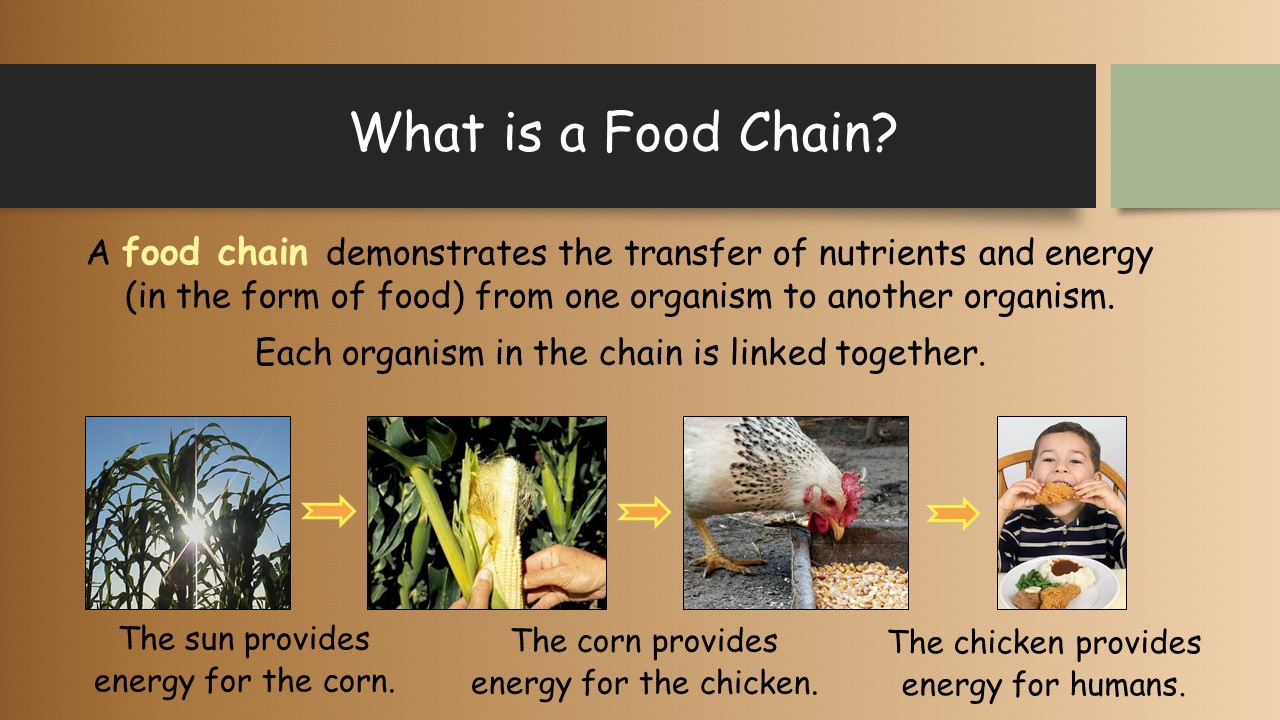
Students find evidence of a food chain that exists within the school’s Habitat Lab and create a model to show the transfer of matter and energy within the environment between producers, consumers, and decomposers.
Click on the maroon links to access free educational materials:
Outdoor Activity Materials: activity pages, clipboards, pencils, copies of field identification guides
Step 1: Engage through Discussion
Engage the students and capture their interests with an Interactive Q&A (or as PDF) that allows you to click through the questions one at a time. You can gauge your students’ understanding of the topic as they answer the questions. Print and use the Q&A Info Sheet (or as Word Doc) to anticipate the next question in the Interactive Q&A and to guide the conversation with the students. (Note: For the PowerPoint (PPT), click “Slide Show” & “From Beginning” to display the questions and answers separately.)
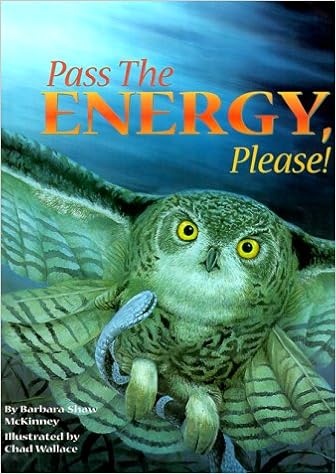
As you read these books, you can further explore the topic and discuss your students’ experiences and knowledge around the topic: Pass the Energy, Please! by Barbara Shaw McKinney Laura Marsh ISBN: 978-10:1584690023
Secrets of the Garden: Food Chains and the Food Web in Our Backyard by Kathleen Weidner Zoehfelds ISBN: 978-0385753647
Step 4: Elaborate with a Field Investigation in the Habitat Lab
Students apply what they have learned as they investigate the topic in your Habitat Lab and record their real-world observations on their activity page:
Version #1 – Find a Food Chain: General Plant or AnimalActivity Page: PDF (as is) / Word Doc (editable)
ProcedureIndoor Discussion:
Discuss the concepts associated with foood chains.
Have the students answer the questions about food chains, the flow of energy, and where different organisms get their energy.
Outdoor Discovery:
Students explore their Habitat Lab to look for and document a link in the food chain.
Have them draw a picture of their food chain link at the bottom of the activity page.
Indoor Discussion:
Have the students use the AWF’s Dig into Plants and Wonders of Wildlife webpages along with any available field identification guides to research their link in the food chain.
Next, they should answer the questions about how the organism obtains and provides energy on the activity page.
Lastly, they draw a food chain that includes their organism.
Discuss how the the energy animals get from food was once energy from the sun.
Discuss how matter and energy is transferred among producers, consumers, and decomposers.
Version #2 – Find a Food Chain: DecomposerActivity Page: PDF (as is) / Word Doc (editable)
ProcedureIndoor Discussion:
Discuss the concepts associated with foood chains.
Have the students answer the questions about food chains, the flow of energy, and where different organisms get their energy.
Outdoor Discovery:
Students explore their Habitat Lab to look for and document a decomposer.
Have them draw a picture of the decomposer at the bottom of the activity page.
Indoor Discussion:
Have the sudents use the AWF’s Wonders of Wildlife webpages for the Millipede, Red Wiggler Worm, and the Pillbug along with any available field identification guides to research their decomposer.
Next, they should answer the questions about how the organism obtains and provides energy on the activity page.
Lastly, they draw a food chain that includes their organism.
Discuss how the the energy animals get from food was once energy from the sun.
Discuss how matter and energy is transferred among producers, consumers, and decomposers.