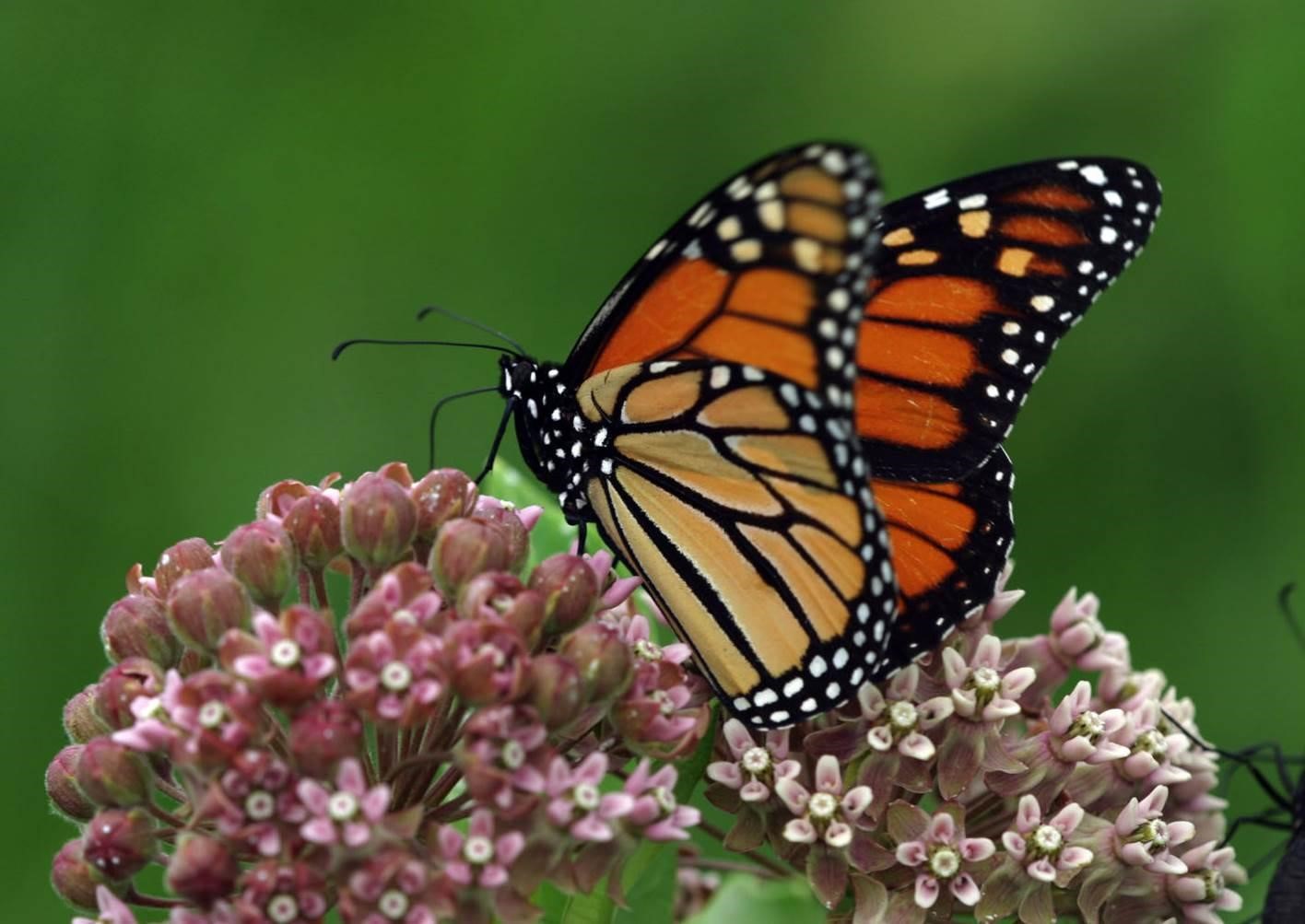
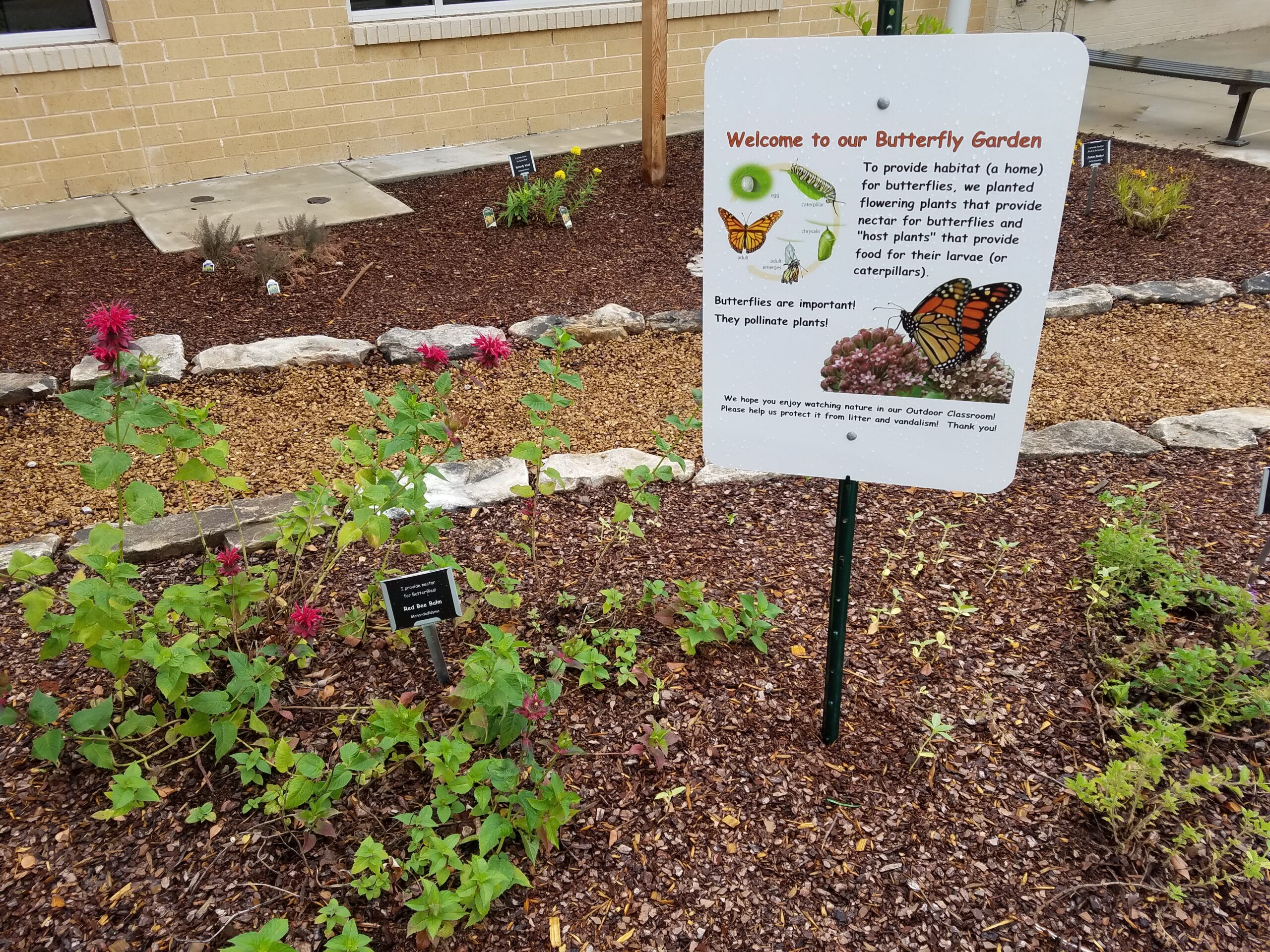
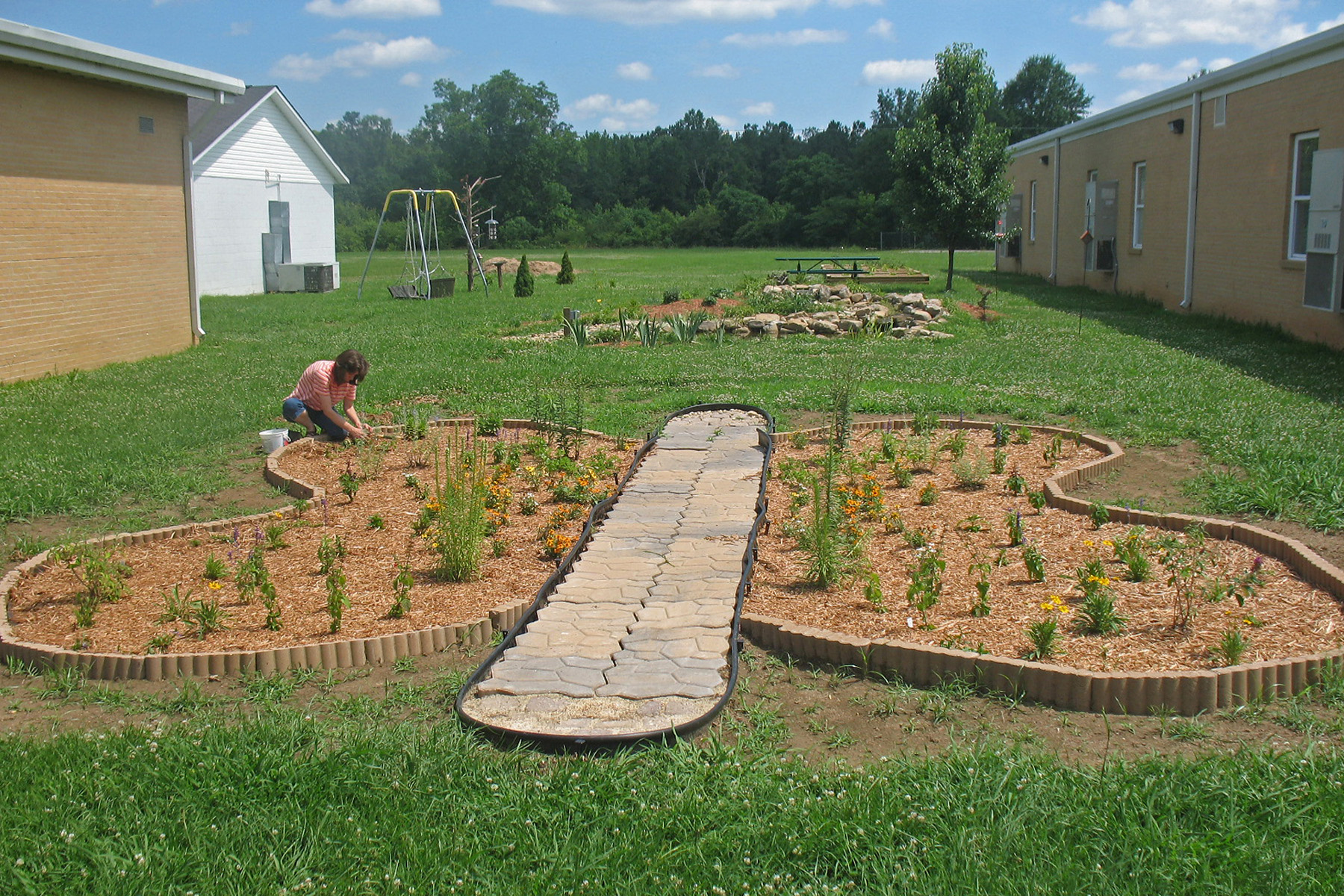
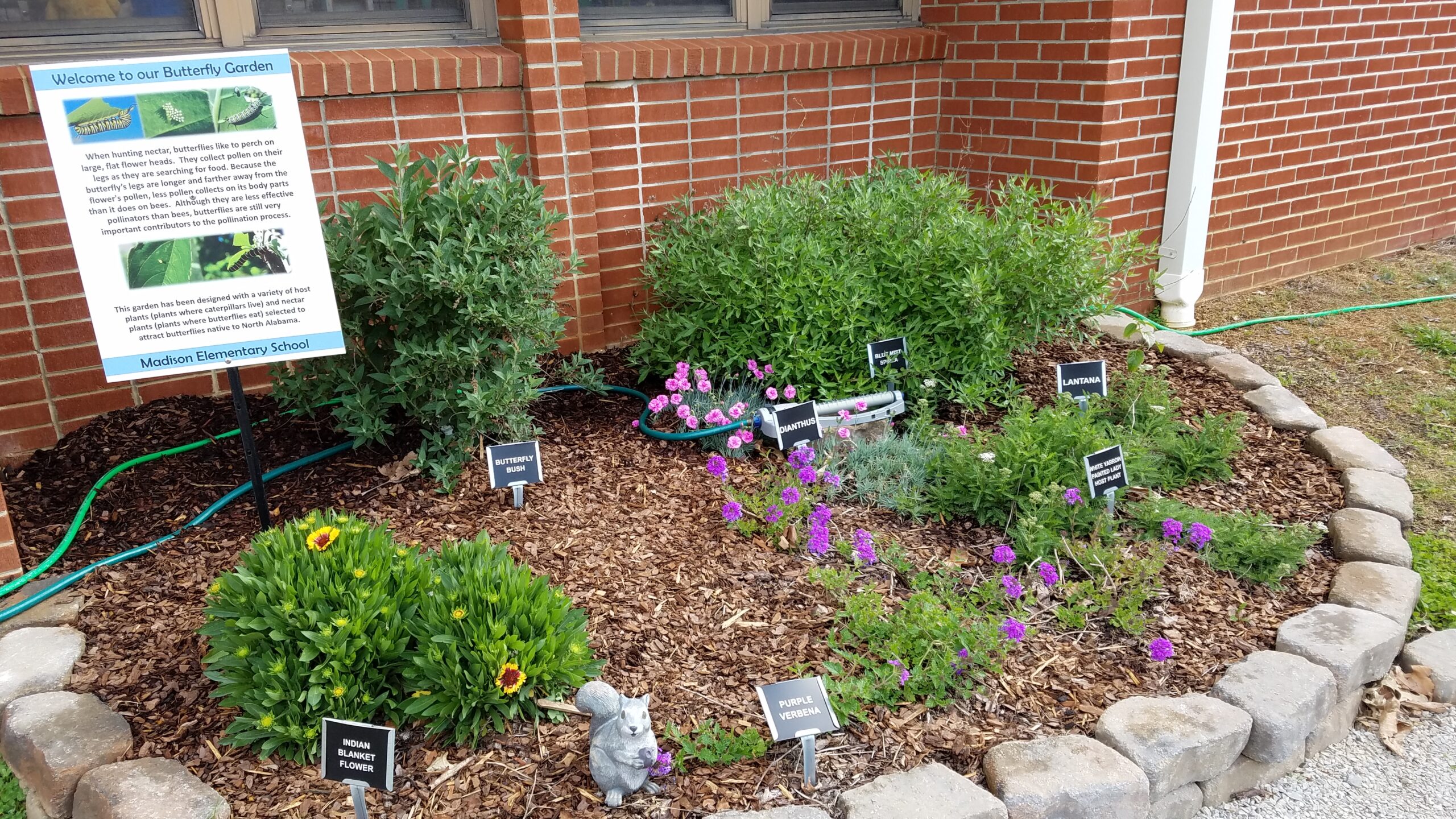
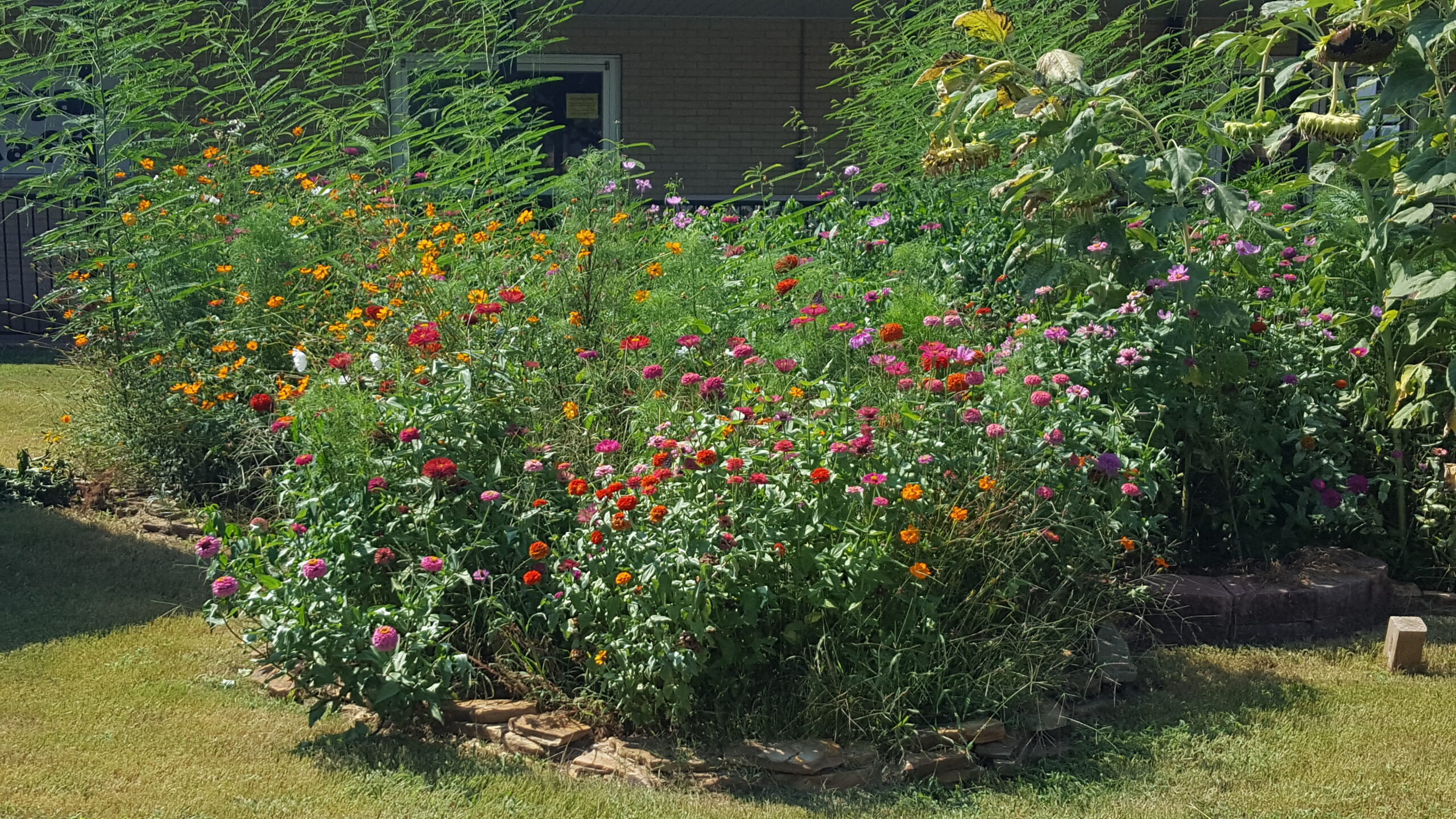
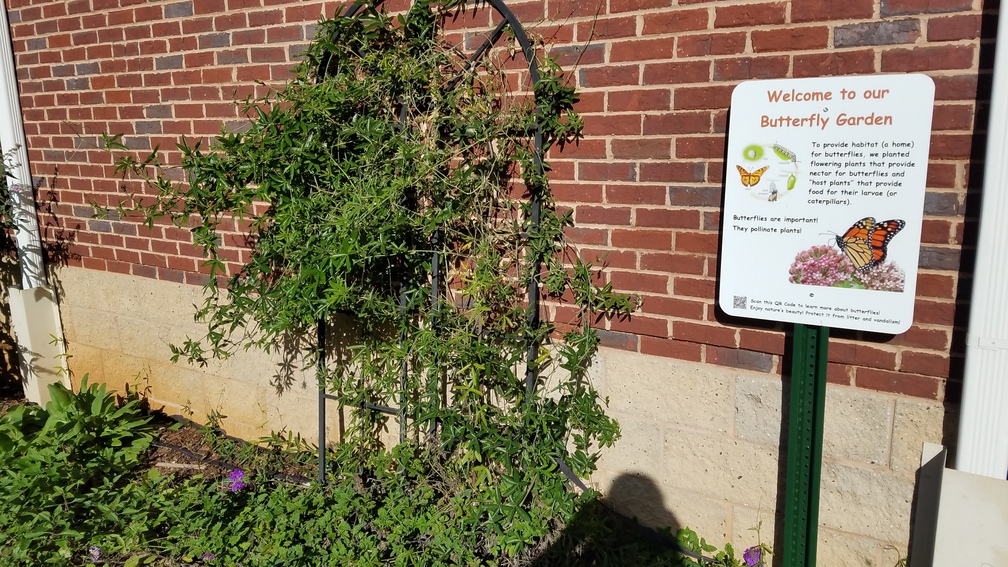
Children of all ages enjoy watching butterflies flitter from flower to flower. Creating a butterfly habitat will attract butterflies for your students to observe and study by providing food, water and shelter for all four life cycle stages of butterflies:
1) egg 2) larva or caterpillar 3) chrysalis 4) butterfly
Below is information that will help you build and maintain your butterfly habitat and use it as an educational tool:
Butterflies will utilize flowering wildflowers, bushes and trees for their food source, nectar, and some will acquire their mineral needs drinking around decomposing plants or animals or around animal dung. Butterflies also get their water needs met by drinking nectar and visiting shallow puddles. Different species of butterflies only lay their eggs on specific species of plants (referred to as “host plants”) and the caterpillars will only eat these plants before creating a chrysalis to go through metamorphosis into an adult butterfly. Butterflies typically take refuge from inclement weather or predators in bushes or trees.
Bushes and trees for cover from inclement weather and predators
Full sun for 6-8 hours per day for optimal plant growth
Optional Habitat Enhancements:
Puddling stations for butterflies that prefer to get their nutrition from dung covered in sand
Dark colored stones where butterflies can warm up
Project Plan: Materials Budget & Construction Instructions
These FREE Materials Budget documents include a list of all of the materials needed to construct one of the butterfly gardens (listed below) on your own.
Standard 3-Sided Butterfly Garden (PDF) – use this Materials Budget if you are using the school building as the 4th side
These Project Plans (listed below) include an itemized budget and suggested source for supplies and construction instructions to help you create your own butterfly habitat.
Standard 3-Sided Butterfly Garden (Word | PDF) – use this project plan if you are using the school building as the 4th side
Use AWF’s “Wonders of Wildlife” webpages to learn more about the butterflies and other animals that may be seen in your Habitat Lab.
Use AWF’s ”Dig into Plants” webpage to learn more about the plants found in your butterfly habitat.
Visit the Alabama Butterfly Atlas website for detailed information about the butterflies and moths that call Alabama home or travel through Alabama during their migration.
Below are free activity pages related to butterflies:
Comparing Adult to Offspring (1st): (Version #1: Word Doc / PDF)(Version #2:Word Doc / PDF) – Students will explore the Habitat Lab as they look for animal offspring and adults of the same species, which they will compare and contrast as they record their observations. AL Science Standard 1st Grade #7: Make observations to identify the similarities and differences of offspring to their parents and to other members of the same species.
How Pollinators Pollinate (2nd): (Word | PDF) – Students look for a pollinator in the Habitat Lab, record their observations about the pollinator, and then draw a model of the pollination process. AL Science Standard 2nd Grade #6: Design and construct models to simulate how animals disperse seeds or pollinate plants (e.g., animals brushing fur against seed pods and seeds falling off in other areas, birds and bees extracting nectar from flowers andtransferring pollen from one plant to another).
Comparing Life Cycles (3rd): (Version #1: Word | PDF) | (Version #2: Word | PDF) – Students will compare their life cycle (the life cycle of a human) with the life cycle of an animal that they find in the Habitat Lab. AL Science Standard 3rd Grade #6: Create representations to explain the unique and diverse life cycles of organisms other than humans (e.g., flowering plants, frogs, butterflies), including commonalities such as birth, growth, reproduction, and death.
AWF’s Habitat Lab Themed Activities
Below are free activities & lesson plans related to butterflies:
Pasta Butterfly (PDF)(Grades: K-2) – Students listen to a story about the life cycle of the butterfly, act out the life cycle stages, look for the life cycle stages in your Habitat Lab, and create the life cycle stages on paper plates using pasta and markers.
Butterfly Book(PDF) (Grades: 3-5) – Students create a butterfly book where they will keep a journal of their observations in the butterfly garden in your Habitat Lab.
How Many Butterflies(PDF) (Grades: 3-5) – Students become “butterflies” as they look for one or more components of butterfly habitat in your Habitat Lab during this physically-involved activity.
Butterflies Without Borders(PDF) (Grades: 6-8) – Students observe butterflies in your Habitat Lab site while searching for monarch butterflies, track the migration path of the monarch, and send a “Symbolic Monarch Butterfly” and letter to students in Mexico.
Bloomin’ Butterflies (PDF)(Grades: K-12) – Students collect butterfly eggs or caterpillars in your Habitat Lab, rear them indoors, and then release the adult butterflies in the Habitat Lab.
Butterfly Gardening (PDF) (Grade Level: K-12) – Students will design and build a butterfly garden for your Habitat Lab.
Additional Activities and Resources
Journey North is one of North America’s premiere citizen science programs for people of all ages. You and your students can report your monarch sightings and your school will be added to the map in real-time as waves of migrations move across the continent. Also, check out their “Symbolic Monarch Butterfly Migration” when your students can send “butterflies” to students in Mexico!
Monarch Watch strives to provide the public with information about the biology of monarch butterflies, their spectacular migration, and how to use monarchs to further science education in primary and secondary schools. Also, follow their guidelines for planting and maintenance to turn your butterfly habitat into a certified Monarch Waystation!
KidsGardening’s mission is to create opportunities for kids to play, learn, and grow through gardening, engaging their natural curiosity and wonder. They support educators and families with grant funding, original educational resources, inspiration, and community to get more kids learning through the garden.