


 |
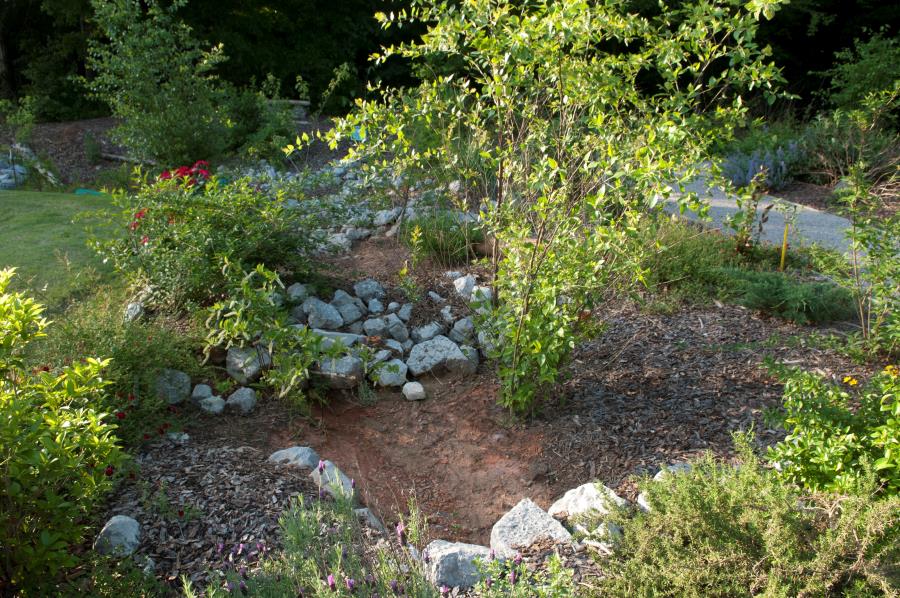
| Example Rain Garden Click image to enlarge it |
A Rain Garden acts as a miniature watershed. Since we don't explain what a watershed is, and it can be a lengthy thing to explain, what do you think about linking some information to that word?? Perhaps https://education.nationalgeographic.org/resource/watershed/ ?? A rain garden is dry most of the time and only holds water after rainfall. The garden absorbs and soaks up stormwater runoff that flows from buildings, rooftops, roads, parking lots, sidewalks, and lawns. This absorption slows the water flow and helps to recharge groundwater instead of allowing the runoff to flow downhill to become a destructive force elsewhere. Often, stormwater overwhelms municipal sewer drains, picks up pollutants as it flows and reaches streams and creeks. This runoff can cause problems such as erosion, sediment pollution, and nutrient pollution (such as and excess of nitrogen from fertilizers and from sewage). These things ultimately cause perils to our drinking water and to wildlife inhabiting the waterways.
Use this environmental concept to mitigate water issues in the schoolyard and create a wildlife habitat at the same time. The species planted should be native Should we link our native plant page?? https://www.alabamawildlife.org/why-plant-native/ to your area and specific to local riparian zones. I think we need to define "riparian" or at least link some info to it…maybe https://www.wildlifeheritage.org/riparian-habitats-life-blood-for-the-overall-ecosystem/ ?? These native plants will act as natural water filters and hold water and soil in place. The plants will also provide habitat and food sources to wildlife.
Below is information that will help you build and maintain your rain garden and use it as an educational tool:
Habitat Suggestions | Materials Budget | Plants & Plant ID Signs | Construction Instructions | Educational Sign & QR Code | Activity Resources | Maintenance Tips | Example Photos
|
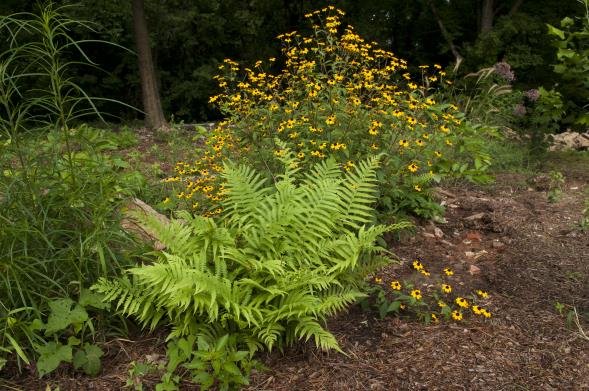 Ferns, swamp milkweed and |
Example Rain Garden Materials List & Estimated Budget (PDF | Word Doc) I think we normally include the list of suggested plants on a last page of this document (see the materials list/ budget files for core stations). As far as the content of the materials list, you'll need to verify this with April since I've never actually built one. But the layout looks good! I think you can take the plant suggestions out of the intro section though since you'll include it at the end.
Plant Suggestions & Plant ID Signs with QR Codes
You forgot Wax Myrtle on the table. I added it in. If there was a reason you didn't, just let me know. Figured you just missed it!
Check out more of our suggested plants for your woodland *Should be rain garden* wildflower garden on our "Dig into Plants" webpage.
These free Construction Instructions documents include a list of Construction Tools & Supplies for Outdoor Classroom Build Day as well as construction and planting instructions:
Looks good! I think you can pull the plant species list out of the intro section and the whole plant section at the top of page 2. We don't normally include that in the construction instructions. I also don't think we ususally have maintenence instructions in the construction document. I haven't built one of these, so April will have to review the actual details of the steps. But the feedback I provided should help get the document into the same format we have our others in.

CLICK HERE to download the QR Code for this webpage.
You can inlcude the QR Code on the educational sign for your butterfly garden *Should say rain garden* in your outdoor classroom: PDF | Word Doc
The links below are to kid-friendly webpages that will help your students explore and research the habitats, plants, and wildlife in your outdoor classroom:
Here are some ideas that encompass the core classes and more to help you implement the rain garden into a variety of lesson plans:
Below are some free AWF Field Investigation Activities related to rain gardens: I think I would add "and Other Resources" after "AWF Field Investigation Activities" since these three listed aren't actual field investigation activities (FIA). Then you could also list our 2nd Grade Evidence of the Water Cycle FIA, 2nd and 4th Grade Parts of a Plant FIAs, and 4th Grade What's the Scoop on Soil FIA.
To allow classes to adopt the pollinator garden and help take care of the plants and pollinators in this habitat, use this Learning Station Adoption Form (Word Doc | PDF), along with the maintenance tips below that include feeding and care instructions:
I think this is a great start! I think you could mimic the fall and spring maintenance docs for the frog and toad habitat so that we keep the formatting standardized and have two distinct seasonal docs. I believe most of the items on those frog and toad maintenance lists would also apply to the rain garden as well, and you could add the additional items you've listed on your current document linked above.
To create a map of your school's Rain Garden, use this Example Learning Station Map & Plant ID Form:
(Word Doc | PDF).
 |
 |
|
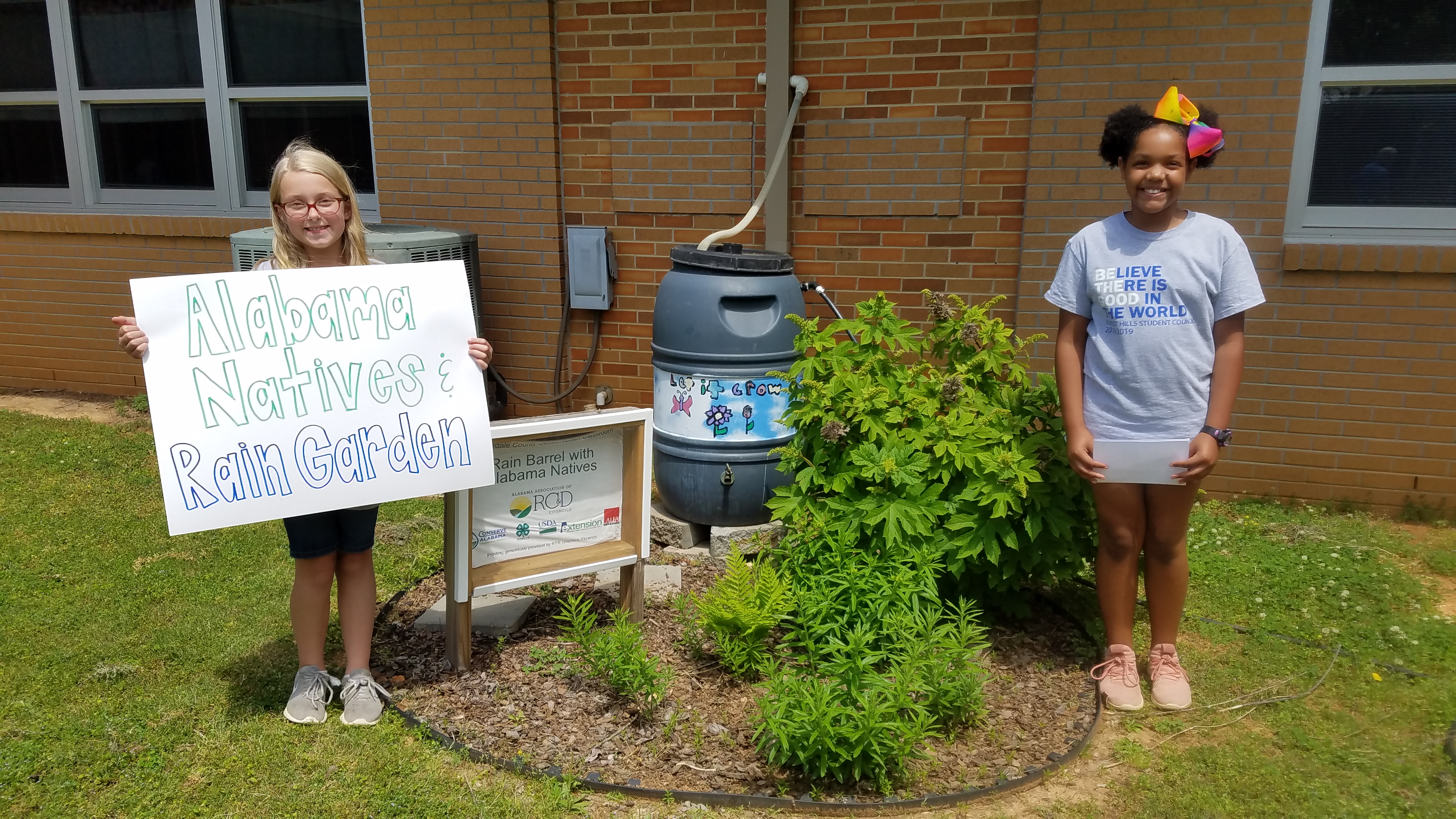
| Forest Hills Rain Garden with Alabama Natives and Rain Barrel | Do you have a caption for this one? Do we know where it came from? Should it also be expandable? |
|
Questions: Contact the AWF at oc@alabamawildlife.org.